• When all the pieces fell into piece…
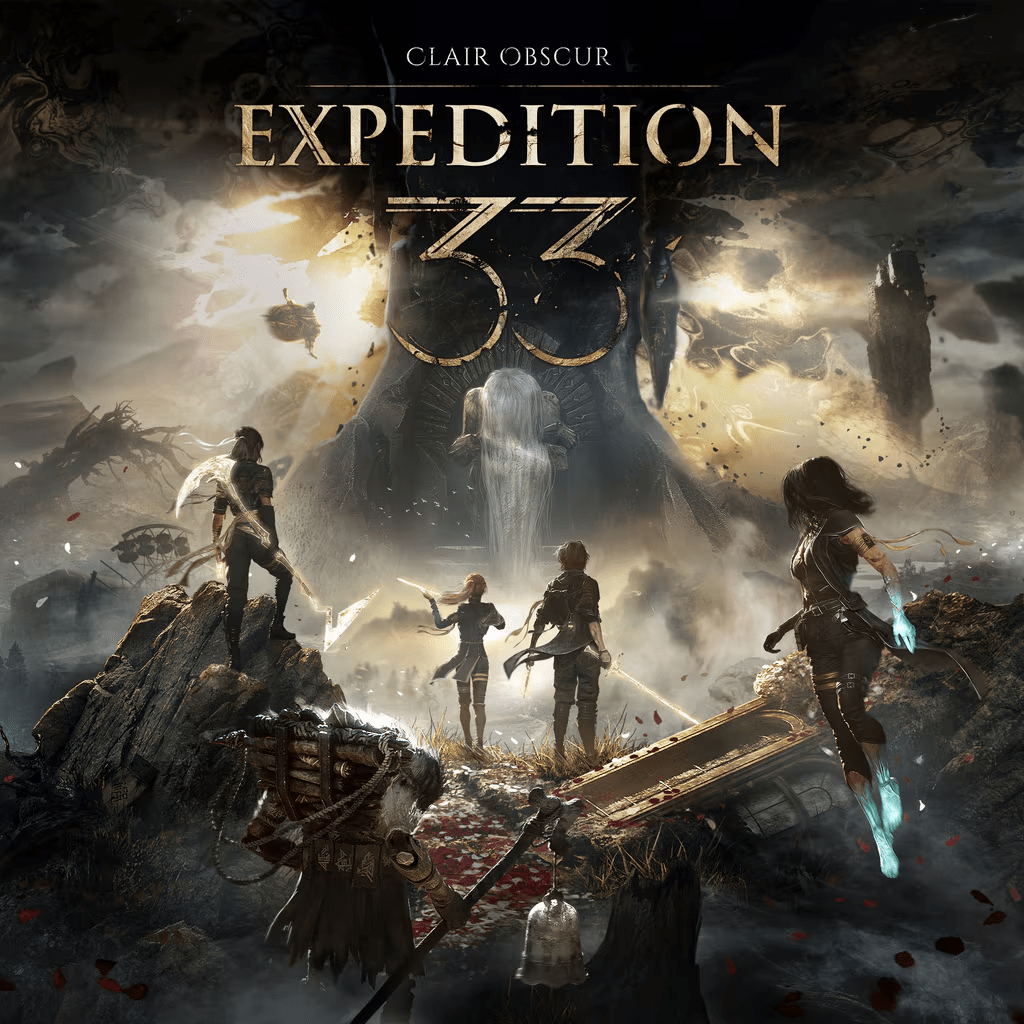
    The first ever game from Developer Sandfall Interactive Clair Obscur: Expedition 33 turned out to be a massive hit garnering both critical and commercial acclaim, whilst being a strong front-runner for the category of ‘Game of the Year’ at The Game Awards hosted by Geoff Keighley.

    Who would’ve thought a relatively small team from France would captivate the world and deliver such an incredibly moving and dynamic video game.

    This is my ‘Game of the Year’ and I shall try and give some brief points as to why this game impacted me the way that it did.

    ========================================================================

    1. SINCERITY:

      The premise of this game is that a group of Expeditioners are trying to eliminate ‘The Paintress’ who writes a number, with all the people below the given number vanishing. The Number starts from 100, and so Expedition 33 are the next group of people to battle against this brutal existence and coming to terms with their mortality, as they venture beyond their home to defeat ‘The Paintress’ once and for all.

      What really grabbed me from the beginning, was how the game took a sincere approach in showcasing flawed and complicated characters, whilst portraying a great sense of humanity juxtaposed with the deep sense of melancholy and sadness. The world is grim but also beautiful, and it is the case where the characters are written in such a careful manner to be both grounded and believable not being a parody of itself.

      The story delivers because of how you as the player are slowly unravelling all its secrets through active participation, coupled with great character building moments with your party members. The game has a message and set vision and does not waver in really tackling the themes it explores such as grief, love, light and dark. All the elements of the story work in tandem because the game knew where it wanted to begin and where it wanted to end, not being bloated and tiresome as RPGs can end up becoming.

      ========================================================================

      2. RHYTHM:

      What I mean by ‘rhythm’ is that the game reminds me of a full blown ‘Rhythm Heaven’ RPG game where you are actively rewarded for being able to correctly ‘dodge’ or ‘parry’ (dealing a counter attack if timed properly). The dynamic gameplay is enchanting with excellent character animations and that despite it being a ‘turn based game’, there is that level of active participation and awareness that is the opposite of static gameplay. Being able to time your inputs correctly to deliver sustained pressure and damage to your enemies, is both exhilarating and highly addictive. You are actively incentivised by a gameplay system that rewards calculated risk and aggression, whilst also accommodating different playstyles.

      What does slightly bother me is how the user interface can be a bit too overwhelming at times and cluttered. This is apparent when looking at Pictos, which are multiplier buffs you can equip to your party members.

      ========================================================================

      3. ART DIRECTION and SCORE

      Expedition 33 excels in how it can transport you to various different biomes and locations with its own distinct feeling. The game is beautiful with stunning art direction, which allows for greater immersion. The art direction makes the game really stand out and be in line with how the Developers wanted to create a mature story with fantastical elements.

      Yes I cannot forget about the newly discovered video game composer who was found in a random forum: Composer Lorien Testard. He allowed Expedition 33 to have a soul with such groovy, upbeat and downright brutal scores that elevate the atmosphere and really set the stage in whatever gameplay section you are in. All these ingredients fuse together to elevate an otherwise great RPG into something that is timeless.

      ========================================================================

      There are so many other things I could possibly mention.

      But I urge you to check out this game because it is in my opinion, a generation defining RPG that is greater than all the sum of its parts to deliver such a raw and engaging story that never outlasts its welcome.

      This game is in the pantheon of RPGs that are best in class, to provide such a memorable and unforgettable experience.
    1. A slow crawl into the unknown…

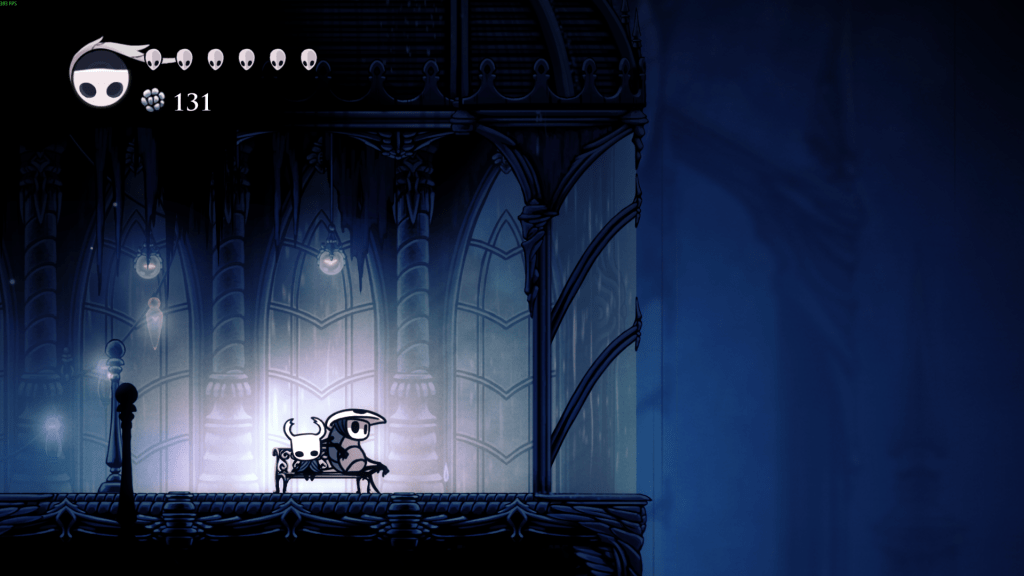
      For those that don’t know, Hollow Knight is widely considered to be a masterpiece and is one of the most successful crowdfunded Indie Games, which released back in 2017.

      This is probably my first formal introduction to Metroidvanias and I have to give massive props to independent developer Team Cherry. It blows my mind, that this video game was made by a core of 2 developers and a composer. To preface, I have yet to complete the game but from the roughly 50 or so hours I have spent exploring, dying, re-exploring and dying repeatedly to all sorts of enemies and relentless bosses. I have yet to give up on this journey.

      Despite my early gripes with the game in terms of having to pay for items such as maps, needing a ‘compass’ equipped to really navigate these intricate maps. I just found the early game rather tedious and for lack of a better word ‘stingy’ in having to do all these extra steps to really make significant strides.

      However, the more hours I put in. The more the game began to really click me with me. The best analogy I have with this game, is learning how to navigate a Tube Map. For some people, it can get boring and frustrating having to go back and forth and how the path can seem nigh on endless.

      But for me, what Hollow Knight does best is that it embraces the thrill of exploration and that by moving around the Map, you begin to pave your own way, your own course and charter new experiences that are special to you. The game allows you to be lost and this is by design.

      The excellent presentation and atmosphere combined with the opaque storytelling makes Hollow Knight something greater, in being almost like a fairy-tale that we get to tell multiple variations of. There is deep sense of sorrow and sadness, juxtaposed with the persistence to learn and uncover the truth of what is happening in this brutal world.

      I probably have so much more to say…

      But I am truly glad I stuck with Hollow Knight as there are very few games that make me really reflect on the game design and sheer execution of making the player have agency and letting them have the grace to be lost and keep on fighting on the beaten path.

    2. Where to begin?

      Microsoft has been in a rather contentious state with its gaming Division Xbox and I would say it has been in somewhat of a rut for many years. The gaming audience and the gaming industry at large are feeling the effects of a trillionaire cooperation maximising profit and quarterly earnings and laying off significant amounts of employees from its gaming division. The Layoffs itself being made across different studios and Xbox’s publishing operations.

      And when it rains, it pours… There seems to be constant press and not the good kind when it comes to Xbox and what the future holds. Microsoft’s subscription service Game Pass, recently had a 50% price increase, which leaves much to be desired and is especially a hard pill to swallow when you consider the cost of living crisis with people’s wages barely keeping up with the rise of inflation. Video game prices have also swung high being as high as 80 dollars, now leaving many consumers wondering how they can sustain such an expensive hobby.

      Now Microsoft is not unique in raising the price of its subscription service Game Pass, or raising the price of its select first party games or even increasing the price of its current console line-up in the Xbox Series S and X respectively.

      But what creates further hurt and ruins the image of Xbox, is that Microsoft cannot seem to figure out what it wants to do moving forward with the Xbox ‘brand’. Now more than ever, does Xbox seem like a sterile and cooperate husk of its former self with a desire to simply maximise profits with instant returns and fail to properly manage its game studios and work on delivering great games nurturing the vast talent under Microsoft’s portfolio. Now it is not like Xbox does not have any good games under its belt, but the growing apathy with Xbox comes from all the studio closures, layoffs, and cancellations that ultimately hurt not only Xbox, but the gaming industry at large.

      Microsoft have openly admitted how they lost the console war, but what is worse is that Microsoft have made bad decision after bad decision, which makes you question why even invest into the Xbox ecosystem when you can simply decide to get a PlayStation or save up money to invest in a good gaming PC when Xbox Games are now largely multi-platform. What I am trying to gage is that a traditional ‘console’, seems to be a dying breed and having no competition with Sony’s PlayStation is not a future I am too fond of.

      Competition can be a good thing for the consumer and even if Xbox have promised to have a next gen console. I fear the damage is irreparable when it comes to the Xbox brand and with Sarah Bond (President of Xbox) calling the next Xbox “very premium, high-end next-gen console experience”.

      It just makes me predict, that Microsoft will sooner or later exit the ‘console’ space similar to Sega and with its recent marketing in trying to have nearly every conceivable device as an ‘Xbox’ and Microsoft having something like the Rog Ally X indicating to me that Microsoft will allow third party companies to make licenced ‘Xbox’ branded hardware systems being largely a PC (and having to use Game Pass, unable to access Xbox Console Library). It seems clear to me that Microsoft are not impressed with the Gaming Division of Xbox and are imposing unrealistic profit margins, which is said to be a target of 30 percent profit margins for Xbox.

      So then the question becomes: is Xbox dead? I would say Xbox as a dedicated ‘console’ seems more and more like a bygone era, with Microsoft now placing Xbox Division as a multi-platform money making machine.

      My hope right now is that Microsoft can properly invest and manage its current gaming studios and focus on making great games first and foremost with realistic and grounded expectations. Gaming is very much a luxury, but it is also the medium of so many dynamic and rich games to play from. Allow for the scaling of development to foster multiple unique projects and not every new game has to be a massive Triple A project with enormous budgets. Make use of the diverse catalogue of Studios Microsoft has bought and allow the developers to make something they are equipped to make. I am under no illusion that making Games is a business, but Microsoft will need to understand that laying off a huge chunk of your workforce is not necessarily going to breed long term success, despite whatever short term gains it may generate.

    3. Not the Genre Defining JRPG for me.

      I think Metaphor: Refantazio is not a life changing JRPG nor is it best in class or even a ‘Magnum Opus’ for Developer Atlas. From what I read, this game has been in development for quite some time and you can tell the final game went through quite the ringer.

      What I mean by this, is that the game feels like a mixture of ideas and gameplay elements that on the surface look promising, but falls flat when under inspection. The Dungeons are so boring and at times feel like padding to stretch the runtime of the playthrough, the ‘puzzles’ and Dungeons itself feel so outdated and barebones. Atlas can be praised for the dynamic U.I Screen, but again on the surface it looks great- but the more you use the menu to me there are some aspects of the options inside the menu being at times distracting with ‘visual noise’ and unintuitive to use for practical use.

      I really did not find the setting nor characters that engaging or memorable that would make me go to great lengths to really sit back and take note of what they were saying. Also, this became a bit of a gripe but the actual graphics for the game looks rather PS3 era. The 3D Character Models in game are so poorly rendered and washed out and this contrasts with the illustrated character face cards you see when they are having dialogue with you. I could not unsee this as I would also get distracted with the character face cards, alongside the 3D rendered character on screen which just made character dialogue rather nauseating. You have such a well illustrated character face card contrasted with in-game rendered 3D model looking like a Temu knockoff. I understand there is differences from adjusting 2D to 3D designs- but then at that point I’d rather commit to the former than the later with how much of an abomination it looks. I am not a stickler when it comes to graphics but it stood out more like a sore thumb when the overall narrative of the game felt rather uninspiring.

      There is a lot of style, but lacking in real meaningful substance. The story and characters and world-building failed to really grab me besides sprinkling in philosophical ideas, there is not any real hard hitting moments that made me feel truly compelled or engrossed into this overarching story and despite the game tackling many deep themes such as racism, prejudice and totalitarian ideals versus free speech. All of what is represented to me feels rather tedious and not carefully embedded and intertwined and seems hastily included as a means of playing through ‘political’ mindsets, but not really having that level of nuance and care to elevate these thematic ideas into something greater than surface level readings.

      The gameplay is great which is what kept me going, the restart feature in battles is one of the best quality of life features ever and should be a staple moving forward in turn based RPGs and RPGs in general. I spent hours playing through this game and it was partly motivated by me wishing to see what all the praise was about and the personal desire to simply see out this game for what it was on my own terms.

      I personally see this as a solid ‘good’ video game, that is approaching ‘great’, but is not amazing and certainly not a Generation Worthy JRPG or Masterpiece that it may be labelled as. I was somewhat disappointed in that I really hope Atlas can improve its game design and work towards better fine tunning the narrative elements, than being a bit of a convoluted mess.

    4. Director Paul Thomas Anderson strikes hard and fast in this gripping thriller.

      As I begin writing this review, I have to admit that I am not someone who is very much into Paul Thomas Anderson films. It is not that I do not appreciate his past films, or admire the way he crafts such messy and complicated characters. It is more so, how I am not so deeply connected to his films than I originally thought.

      And I do have another confession to make. I still believe I need to see more of his past films such as ‘Boogie Nights‘ (1997), which from what I understand actor Leonardo DiCaprio regrets not taking the project.

      DiCaprio sure as hell could not make the same mistake twice. The latest film directed by Paul Thomas Anderson ‘One Battle After Another,’ delivers a chaotic and morbid inspection into rebels fighting the establishment, with a string of consequences. DiCaprio, in the lead role of the revolutionary ‘Bob’, must face his past nemesis and save his daughter Willa (Chase Infiniti) that has gone missing.

      And boy the film sure runs close to three hours long, being two-hours and fifty minutes in runtime. But even though I wanted the film to be somewhat shorter in length, I respect that the film attempts to cover as much ground as possible.

      The analogy I sort of have with this film, is stretching a rubber band and watching all the forward momentum as the band is released. The film tackles some real-world issues, that has parallels to the current day United States with immigration, racism, police violence and rampant division amongst communities.

      Despite all sorts of heavy themes, the film does have a unique sense of humour almost basking in all the destruction and cynicism to find some nuggets of comfort. Although there is enough screentime to establish the intimate relationship between Bob and his lover Perfidia Beverly Hills, played by Teyana Taylor, I am not a fan of the latter’s character arc. However, what the film captures so well is the highs and lows of revolutionaries as they try to evade the law and get caught inside paranoia and heightened sense of security.

      The stakes are well and truly set through the villain that is played by Sean Penn. I will not give too much away, but this character demands your utmost attention. There is levels of uncanniness and insecurity that is embodied by Sean Penn, down to the way he adjusts his physical movement and mannerisms.

      The real star of the film, in my mind though was Chase Infiniti playing Willa Ferguson (Bob’s daughter). For such a young actress, she stood amongst seasoned professionals delivering such a raw, vulnerable and dynamic performance that makes me have no doubt that we will see more of her in future Hollywood projects.

      The film creates tension and adds upon further tension leading to ensued chaos and delight. This movie works so well because it does not take itself too seriously, but at the same time knows when to pull its punches to deliver a killer blow. However, at times I felt that the movie could have wrapped up sooner than it did, being a bit too self-indulgent.

      If you have the ability to watch this film in IMAX, I’d recommend it.

      This was certainly one of the best theatre going experiences I have had in a long time, and is the type of film that inspires me to continue to work on my own creative projects.

      Overall, Paul Thomas Anderson certainly captured my attention in this one.

    5. There is a timeline in place…

      Today’s post I thought about looking into what Sony has presented in their recent ‘State of Play’, as to the upcoming slate of video games for 2025 and beyond. I shall look at things I found noteworthy and this is not in any way a summary of the entire list of what was presented in the showcase. Let’s jump in…

      ========================================================================

      1st Takeaway:

      We are getting actual release dates for games in the near distant future- 2026. Mark your calendars and do not be surprised of potential delays (especially in this Climate).

      Looks to me the Game Publishers and Developers alike are very much bracing for impact of the much anticipated title: Grand Theft Auto 6 scheduled to release on 26th May 2026. My personal hunch and knowing Rockstar Games, I see a world where GTA 6 gets delayed again but still releasing within 2026.

      All this in mind, Game Publishers be putting release dates before the record-breaking storm that is GTA 6.

      You see the likes of Crimson Desert, developed by Pearl Abyss having an official release date of March 19th 2026. This is definitely a game from previews that has a lot of gameplay systems on top of gameplay systems that looks to have depth and complexity in terms of combat. So it is very much a game, I am curious about in terms of reception and overall story/gameplay when it is scheduled to release in March of next year.

      ========================================================================

      2nd Takeaway:

      Developer Insomniac Games have reminded us that Wolverine is definitely still in development and scheduled to release in fall 2026.

      This is a sidenote but I am especially happy for Insomniac Games considering how the company had been affected by criminal cyberattack back in 2023. Just as a brief summary, many Employee data, company emails and early details of the upcoming Wolverine game were among sensitive stolen info published by a hacking group. To add salt to the wound, there was also a timeline (that may be subject to change) of Insomniac’s Upcoming Projects for the next decade.

      On a personal and human level, I feel bad for the hard working people at Insomniac Games in which there is no doubt in my mind that the entire Insomniac Management are having to re-adjust their plans and game development cycle in massive part due to this devastating hack.

      All that aside, the trailer for Wolverine has the right flavour of action, gore and blood with brutal animation sequences. This game is shaping up to be something special and it was nice to see the people behind Insomniac Games talk about their game that they have spent years developing and going through the trailer they had composed. We also saw the actor playing Wolverine in Australian actor Liam McIntyre. Another Australian actor taking the mantle- who would’ve thought?

      So then in short, this State of Play felt like a reminder of the things that Sony (in terms of first party) have in store, with more information and gameplay snippets shown.

      If I had to guess, the Game Awards in December would probably have some ‘Big’ announcements.

      I’ll probably take a look at the Tokyo Gameshow Next even though there seems like little in terms of ‘Big’ announcements.

      This year in general has been a phenomenal year of Video Games, with so many varied and unique experiences. It really has not been a bad year for this ever-evolving chaotic medium.

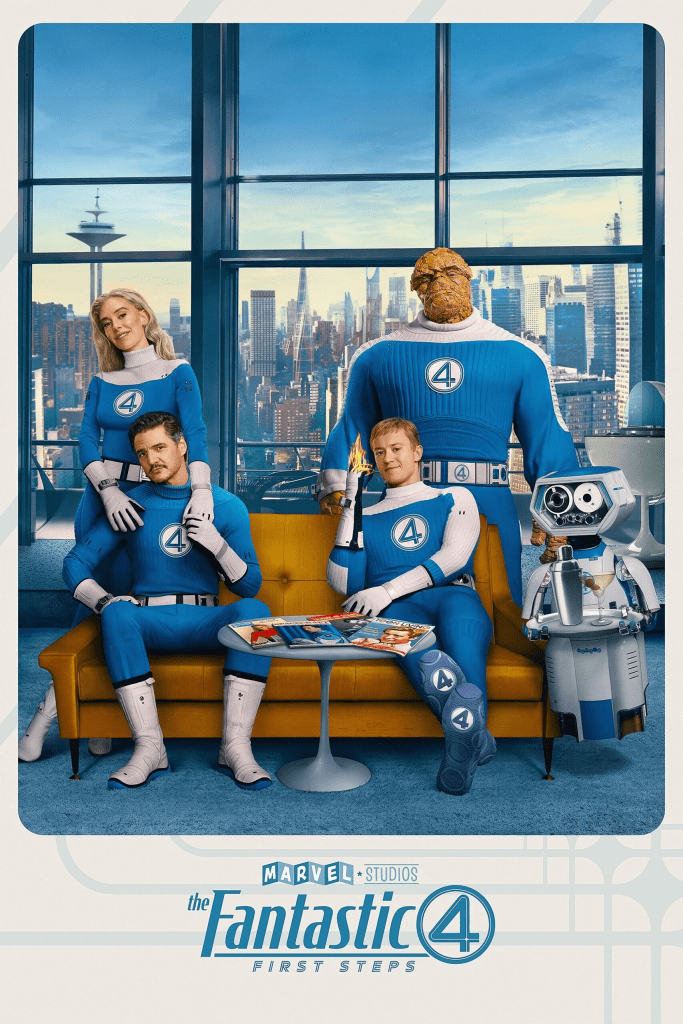
    6. The Fantastic Four are back with one foot firmly planted on the ground, yet with one foot stuck in space.

      The Fantastic Four: First Steps directed by Matt Shakman delivers a family drama within a retro futuristic setting. The tone and atmosphere is brimming with initial wonder and excitement, but that slowly dissipates in a film that loses sight of making a well-rounded story depicting theses iconic characters. I do like the setting and how it tries to differentiate itself from modern day New York- this adds to the flavour in how you have this superhuman family advancing civilisation, being regarded as Earth’s main protector.

      The casting choices are wonderful going from the socially inept and highly intelligent scientist Reed Richards played by Pedro Pascal to the charming and diplomatic Sue Storm played by Vanessa Kirby, serving as head of the dysfunctional family. I really like the play-boy and charismatic nature of Johnny Storm played by Joseph Quinn and the gentle and direct approach of Benn Grimm played by Ebon Moss-Bachrach.

      All that aside, I just did not feel entirely invested within the story or characters at large. There is that itch in the back of my mind, where I could not help but ponder that Disney were really trying to speed-run and establish the Fantastic Four with brute-force efficiency, than allow the characters to really be fleshed out and be realised for who they are. The lack of nuance and subtlety at really getting to grips with who these characters are and how they function is a major disappointment and serves as a detriment to my enjoyment of this film. To be blunt, I have no inclination to watch this film again and remains rather forgettable.

      You can already tell that the ‘Fantastic Four’ are part of the over-arching plans of Disney and Marvel, which aim to feature them in the upcoming movie Avengers: Doomsday. That is not inherently a bad thing, it becomes a concern where the film that is establishing the ‘Fantastic Four’ becomes rather stale and safe in how it decides to tell its story.

      The third act of this film is rather rushed and the villain of Galactus becomes nothing more than a ‘Space God’ lacking any real depth and nuance. It is a real shame as I can get behind impeding world ending catastrophe that the ‘Fantastic Four’ are trying to avoid, but again there is a lack of care and attention that is given for how these characters decide to act and push forward. The consequences are inconsequential and I mean that from a character point of development. All the big battles become fodder and uninteresting as you keep watching onwards.

      The film really tries to harken to its central theme of family and unity, but what you get is something very wishy washy and not really containing deep emotional resonance. The Fantastic Four do not have this seismic shift in how they view the world or their ‘family’ with all the events leading up to the final act, becoming rather flat when under full inspection. The jokes become mere dressing to obfuscate boredom and tedium almost like trying to meet its daily quota.

      The Fantastic Four: First Steps is a film that is more like a spring board for ‘greater things’. It is sad because with all the talent and great casting choices that Disney have at full disposal, the essence of crafting and honing in on making a good story has been forgotten.

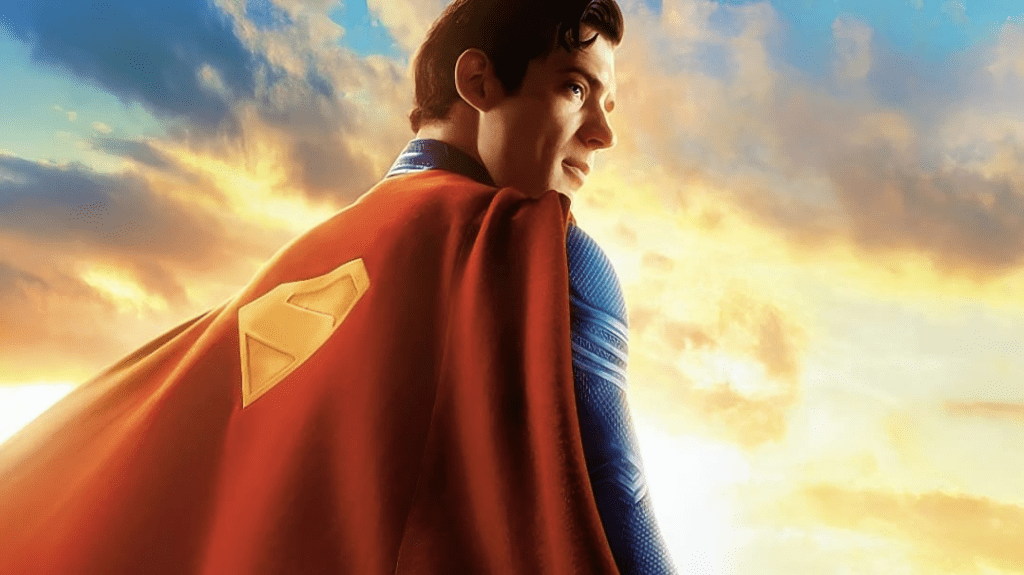
    7. The Live Action Flick directed by James Gunn has some teething issues…

      It’s been a while since we have got a live action film dedicated to Superman with the last feature being Man of Steel (2013) directed by Zack Snyder. Snyder’s version of Superman really felt like a departure of who the character was, in being rather sullen and lacking the warmth you would expect from one of the most selfless and altruistic fictional characters ever written.

      I make this point to showcase how Gunn’s interpretation of Superman leans more into his comic book counter part in being a symbol of hope and boundless optimism. In that regard, I would say the film accomplishes the main task in establishing the core values and principles of who Superman is and embraces the corny aspects.

      But that alone does not propel this film into a ‘great’ epic that is deserving of the ‘Big Blue’. Superman (2025) is a film that I do not like a great deal, despite me wanting to love it.

      Before I approached this film: I had this impression from James Gunn that he was not really interested in making a Superman movie, but this was something that he was mandated by Warner Bros to do as he is now spearheading the ‘DC Cinematic Universe’ (DCU). I had some recollection of him saying in an Interview years ago on how he found Superman to be a rather uninteresting character. Now my memory could be faulty and this is all speculation on my part, but I just could not shake the feeling that this was a film made by obligation rather than something that James Gunn wanted to create from the very beginning and was really passionate about making.

      David Corenswet playing Superman has the charisma and charm, being able to switch between ‘Clark Kent’ and ‘Superman’ with ease. His co-star in Rachel Brosnaham playing Lois Lane is a near perfect casting choice. Both these actors have great on-screen chemistry, it is just a shame that the relationship between these two characters feel under baked (now I understand the film makes both of them in the early days of their relationship, but the relationship lacks real emotional punch and development).

      That being said the movie does a great job in leaning into the fantastical and bombastic nature of comic books being wild and frenetic and understands the assignment in making the audience understand why Superman is the way he is. I just find the film lacking in carrying emotional weight that a character like Superman should carry in spades.

      This is where the problem lies, the pacing and structure of the film collapses under its own weight. The film has too many characters that either lack real development with the over abundance of jokes under cutting the tension. We do not see Superman really grapple with the decisions he makes and really contemplate how his actions can have consequences, despite his noble intentions.

      The film does not earn its heart felt and endearing moments and instead leans hard onto the big action set pieces that can be fun and entertaining, yet when all that washes over there is an absence at really digging deeper at the themes and ideas of Superman. When the chips are down, Superman (2025) in my eyes fails in really making me care about the world and characters at stake.

      I have yet to even comment on the villain ‘Lex Luthor’ played by Nicholas Hoult, which despite Hoult trying to do the best he can. The Script for ‘Lex Luthor’ makes him a whiny brat and not the calculated menace that he ought to be working as a foil to Superman. To me it came across like character assassination, contributing to a weaker narrative and emotional investment.

      To conclude, Superman (2025) is a film I am truly glad was made and despite my grievances James Gunn has made a good starting off point for the ‘Man of Tomorrow’ with flair and delight. I just wish it had stuck the landing point for the here and now.

    8. This is yet to be the second-coming…

      Warning: Potential Spoilers so be warned!

      It’s hard to talk about things I love. And its even harder to talk about things that put me in a puddle of conflicted emotions, irrespective of the love that has formed.

      I am a fan of the show that preceded this (Daredevil | 2015-2018) – being unceremoniously cancelled by the streaming giant Netflix, despite the excellence of its last Season, Season Three way back in 2018.

      It was a delight to fans of the show when Disney went ahead and brought back this Series after so long- albeit with a new coat of paint, being aired on its new streaming platform Disney +.

      From what I gather, Daredevil Born Again had been mired with a plethora of production issues from re-shoots, original supporting cast not returning to coming back again, writers strike, changing of Showrunner and Executive Producer.

      From what we ended up getting, the Man Without Fear becomes a shell of himself and what we have is a series that is an uneven mess, whilst struggling to find a strong foothold to reach the daring heights of the original series, let alone transcend it.

      And I think that is where the problem lies: I think Daredevil Born Again is trying desperately to separate itself from the original series. That in itself is not a problem, but the problem arises from the failure to understand the characters at play.

      There is a lack of consistent tone, focus and thematic storytelling with Daredevil Born Again, alongside the new supporting cast in Matt Murdok’s life being rather flat and uninteresting. There is no emotional investment that the audience can latch onto with these new supporting cast members being rather surface level.

      The action and set pieces that the series was renown for has returned with some middling results. There is some noticeable CG used in the action and though the violence remains, there is a lack of ‘punch’ compared to the original fight scenes with the cinematography at times making it hard to see the intensity of the fight.

      The new villain feels like a massive wasted opportunity that feels more like a footnote with no real depth and exploration. I would say more, but to say less is more of a compliment.

      Besides any gripes and problems that I have with the new season of Daredevil. In terms of performances, the likes of Charlie Cox as Matt Murdock and Vincent D’Onofrio as Kingpin remain golden. The dynamic between the two on-screen works wonders, despite the dialogue being rather subpar at times.

      I really wanted to love the glorious return of the Daredevil. But this time, rather than have a show than can stand on its two feet, which respect and advance the foundations laid from its predecessor.

      It limps forward battered and bruised, though with glimmers of hope.

      I’ll still be around and watch what comes next because at the end of the day, the love for Daredevil ain’t lost on me yet.

    9. Bonnie and Clyde: On-This-Day Thursday — Films Fatale

      The influential film Bonnie and Clyde (1967) shaped how we see Hollywood today both past and
      present and serves as a reminder for Hollywood to change from stale and repetitive content kicking
      off a Hollywood revolution in how films can be made.

      The context remains important to understanding the films longstanding significance in cultural and social discourse in how Bonnie and Clyde (1967) is a biographical western style film of a romantic couple descending into crime. The film’s plot was set in the 1930s of The Great Depression (1929-1939)of America which resulted in a habitual declineof the economy and many civilians were left homeless or deeply consumed in financialunrest.


      This film had a very ambitious and bold task at hand. It is a film that aims to present a somewhat historical image to the lives of two infamous criminals (Bonnie Parker and Clyde Barrow) who are the destructive forces of the narrative, living very volatile and risky lifestyles. Whilst the film also wanted to not stray away from its core values of presenting America and its inhabitants with scrutinising depth and quality- this film does not detract from illustrating the inequality and lack of opportunities to those specifically of working-class and provides to us a sense of realism and
      grounded scope to how the financial and social crisis of America is an indirect extension to the main
      character motivations of Bonnie Parker and Clyde Barrow.

      Both these characters are in way by- products of the social climate as they choose to deviate towards crime to gain social mobility, notoriety and adrenaline coupled alongside a source of tangible income- albeit unstable and highly illegal. The financial predicament of America resulted in an increase of juvenile crime and delinquency, which the movie subtly portrays rather than censoring and completely cutting from the final cut of the film.


      Many films released during the period of Bonnie and Clyde had to follow a strict conventional style
      of filmmaking and production, yet Bonnie and Clyde chooses to showcase its brutal and
      uncompromising style of narrative and filmmaking, to reveal to the spectators the harsh reality of
      life and how unfiltered acts of violence and conflict is not ‘taboo,’ but rather a potent tool to an
      already flavourful arsenal of ingredients that is compounded to an already plentiful array of creative
      expression that is available to every director.

      The depiction of violence and conflict is a highly controversial topic and subject to extreme dissemination of disgust and disapproval from many critics and viewers- the masses of people who saw Bonnie and Clyde upon release branded this film with hardly any lukewarm reception with major concerns circulating on how violence seems to be glorified and satirised and a notable journalist/critic from The New York Times states how “it is a cheap piece of bald-faced slapstick comedy” (Bosley Crowther).


      Movies had entered the realm of being ‘safe’ on Bonnie and Clyde’s original release in 1967 and
      from a business perspective this can be understandable, as the usage of ‘Ford model’ became
      prominent which can allow wider profit margins. Advertising for films and gaining investors is less
      daunting due to the tried and tested approach to filmmaking, yet the creativity and artistic scope of
      a film is diminished. A modern example, of the ‘Ford Model’ utilised to an extent was when Disney
      created their own extended Marvel Cinematic Universe (coined ‘MCU’). The superhero genre
      became profitable, and Disney were able to perfect their formula for producing entertaining and
      expansive movies which is linked to a shared universe with many movies down the pipeline with set
      release dates/schedules. The ‘Ford Model’ is results oriented, thus following tight schedules and
      rigorous/meticulous planning.

      Many have pointed out that Disney’s Marvel films can feel almost
      rushed with the quality of each independent film not fully branched out or developed- resulting in
      wasted opportunities of storytelling with many directors not being able to achieve their intended
      vision.


      Hollywood after the Hays Code transitioned into the typical age rating system made by the MPAA
      (Motion Picture Association of America) which for the most part seems very reasonable and not
      necessarily obstructive to a filmmaker. The main issue with rating systems is that it remains entirely
      subjective to personal opinions on minimum age requirements, this day and age rating systems feel
      redundant as (labelled) ‘mature content’ (e.g., drug abuse) is now entering younger markets not
      necessarily as restrictive as the Hays period.


      Linking back to Bonnie and Clyde, Warner Bros, and Arthur Penn (director) chose to go against the
      conventional standards of the Hays Production Code-producing a film that is heralded for its flaws
      and celebrated as an undeniable classic. Despite many people pointing out how the characters like
      Bonnie are arguably poorly written being superficial in characterisation, whilst promoting high levels
      of naivety, this is the unique selling point of the film. Bonnie and Clyde work well because it has no
      moral compass, and the unyielding tumult and disorder is used as a narrative tool to accentuate
      humanities’ fears of moral degradation, which is very upsetting to the highly religious and liberal
      America of the time.

      What the film does is highlight two people descending on an adventure of
      trouble and pleasure, yet this permeates into a fun, bombastic and thrilling experience for all
      moviegoers to watch and remain suspended in disbelief. It is a film that knew how to be itself and
      knew that film as a visual medium can act as an experience and not just a source of entertainment.
      Another point to mention, the release of Bonnie and Clyde in 1967 is part of the emergence of New
      Hollywood (where vertical integration/new independent studios and outside collaboration is
      encouraged becoming the new ‘de facto standard’ used by many major studios). The film is not just
      differentiating itself from the filmmaking tropes of The Golden Age (it still utilised the 3-act story
      structure and linear narrative). However, it expanded upon the core values of filmmaking creating
      new leaps to how the industry designs and creates movies. There is no ‘status quo’ that needs to be
      followed, nor should films be designed to meet preconceived expectations.


      Food for thought, if anything Bonnie and Clyde is a sharp meta commentary on how the established
      industry (Golden Age of Hollywood) is unsustainable in the long term, requiring a breath of new life
      with clear definition of visual storytelling and creative talent at the helm and forefront of designing
      awe-inspiring cinematic work. It (i.e., Hollywood) will inherently need a sort of ‘renaissance’ and update patch and ‘New Hollywood’ was able to fill in the blank void of intrinsic artistry, transiting onwards to modern Hollywood and thus forming the industry we see today. There is no defined way of making films and that is a gift worth savouring. Bonnie and Clyde are the perpetrators leading the charge and making us remember how films are boundless and imaginative.